

When Everything Is Called Luxury
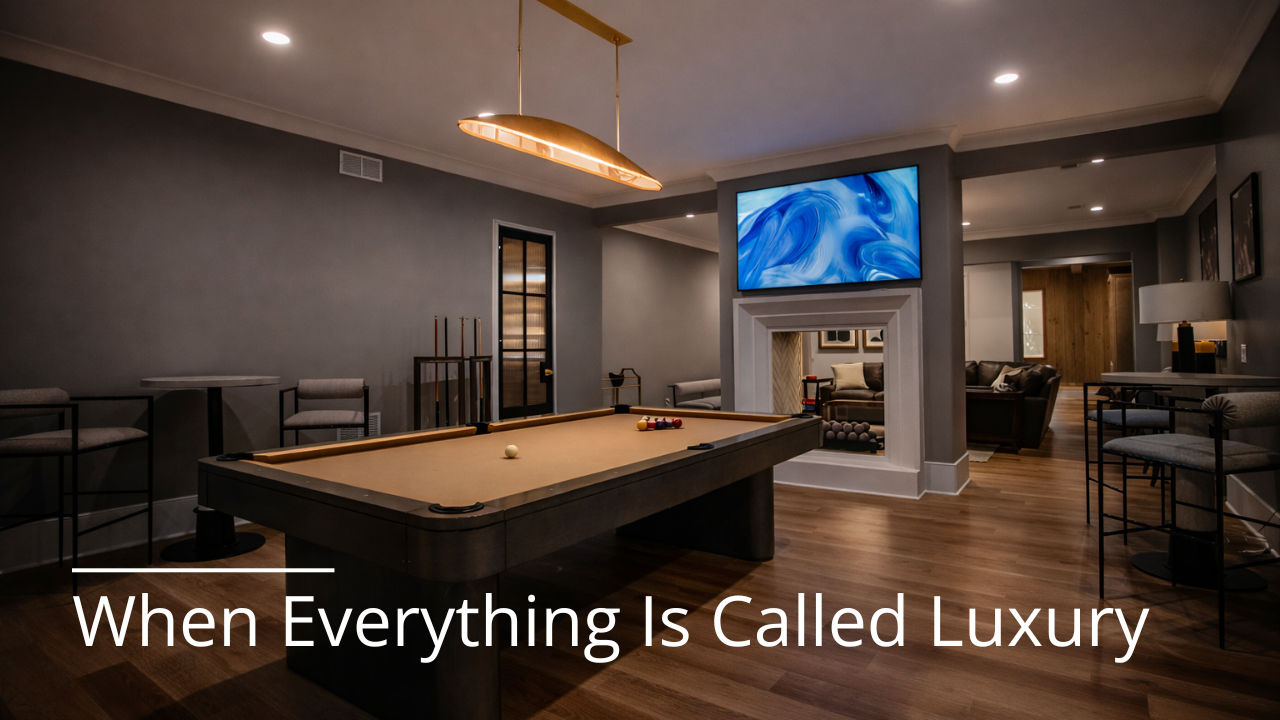
When every home, finish, and development is labeled “luxury,” the word stops helping homeowners understand what they are actually signing up for.
The term appears everywhere in modern construction, often attached to square footage, recognizable finishes, or a higher price point. Homeowners have become more selective because those details alone do not guarantee intentional design, quality craftsmanship, or a better experience.
What people really value is quality that lasts, spaces that function well, comfort built into daily life, and a process they can trust.
The Label Is Easy to Use
“Luxury” can make an ordinary set of plans sound more impressive. Add upgraded countertops, larger rooms, and a few high-end finishes, and the home is positioned as something exceptional.
But the label does not tell you how intentionally the home was designed, how well it was built, or how it will feel to live there.
A home can look expensive and still have a poor layout, inconsistent craftsmanship, or systems that were chosen with little thought beyond the sale.
The label has been used so broadly that homeowners are left questioning what standard it represents.
What Does “Luxury” Even Mean?
Luxury, at its core, means a higher standard of quality, comfort, and care.
It should mean better materials and craftsmanship, strong execution, and more attention paid to the details that affect everyday life. It should give homeowners confidence that the value extends beyond the finishes they can see.
That standard becomes harder to trust when nearly every new development uses the same language. The word has been stretched across so many homes and price points that it no longer explains what makes one home meaningfully different from another.
Homeowners are right to ask whether the premium positioning reflects the quality of the home or simply the way it is being marketed.
Quality Speaks for Itself
Everyone wants to feel comfortable in their own home. You want enough light to feel awake during the day, enough quiet to focus or rest, and enough space to move without feeling confined.
A high-quality home accounts for those needs. It considers how sound travels, where natural light enters, how easily you move between rooms, and whether the air, temperature, and water support your comfort.
But the experience of a high-quality home goes beyond physical comfort. It is the quiet that helps your nervous system settle and the intentional spaces that create connection.
These details are built into the way the home is designed and constructed. They shape how you feel every day and give the home a level of quality you can actually experience.
A Process You Can Trust
The value of a home built around your life begins with a builder who cares about every decision behind it.
You should know how decisions are being made and where your money is going. Questions should be answered directly. Problems should be addressed honestly. The quality of the process should match the quality expected from the finished home.
A premium label means very little without trust, care, and accountability throughout the process.
The word “Luxury” only carries weight when the home delivers on the standard it promises.
