

Why the Most Successful Custom Designs Prioritize MEP Coordination
The most critical details of a custom home are often the ones that eventually disappear behind the drywall. While 3D renderings and floor plans define the aesthetic intent, the successful execution of those designs depends on what happens within the wall cavities and ceiling trusses. High-quality results depend on how well the invisible systems are coordinated during the planning phase.
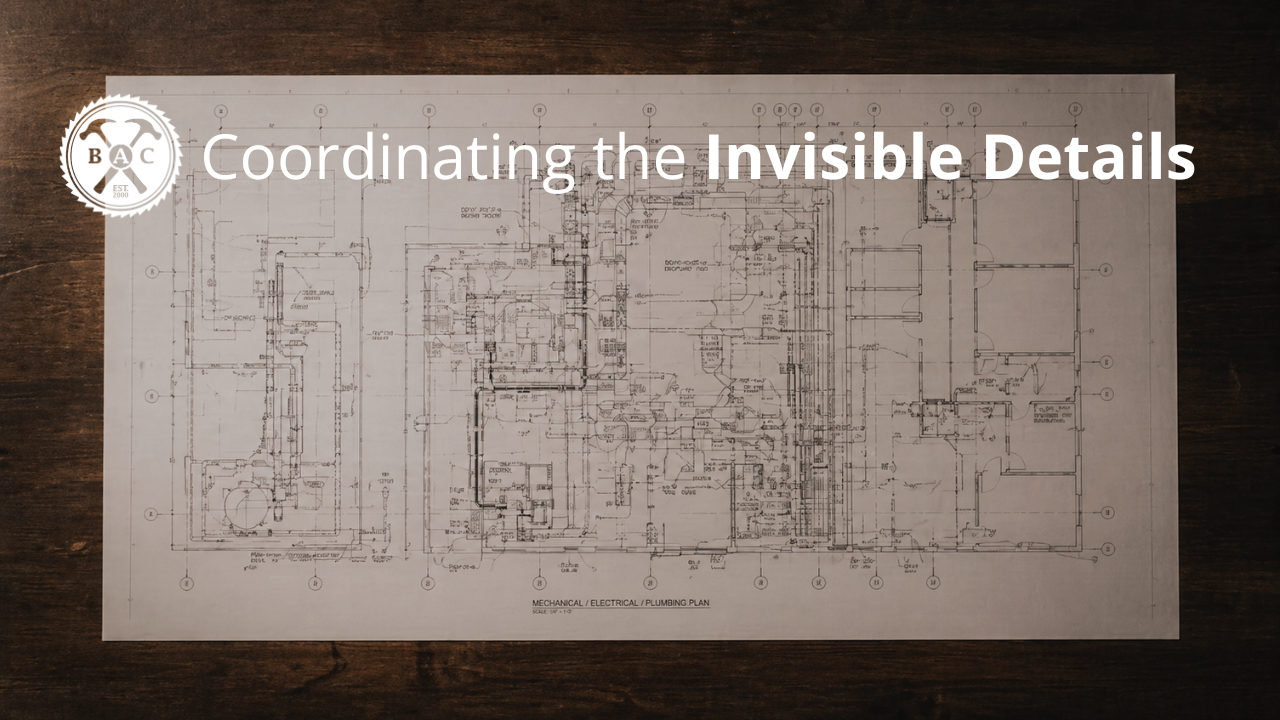
Beyond the Floor Plan: MEP Coordination
While floor plans define the layout, MEP (Mechanical, Electrical, and Plumbing) coordination defines how the home actually functions. For custom estates in North Georgia, these systems are too dense to be left to chance. Without properly analyzing the trade coordination drawings, these systems are often left to be "field-fitted" by subcontractors after construction has already started. This reactive approach leads to immediate conflicts where mechanical needs clash with the architectural intent.
The Physical Conflict: When Systems Compete for Space
A common challenge in custom builds is the limited space within the home's skeleton. Structural steel, plumbing stacks, and HVAC ductwork all require the same specific pathways to function correctly.
When these systems aren't mapped out during pre-construction, the builder is forced to make field adjustments to make everything fit. This results in:
Unplanned Soffits: Boxed-in areas used to hide a duct that couldn't fit in the ceiling.
Dropped Ceilings: Lowering an entire room's height because a plumbing line was placed too low.
Visual Bulkheads: Protrusions in a wall that break the clean lines of a room.
These unplanned additions are the physical evidence of a coordination gap.
The Solution: Stress-Testing the Project on Paper
A disciplined pre-construction phase involves identifying these overlaps while the project is still on paper. By analyzing how the lighting layout interacts with HVAC registers and how structural beams impact plumbing routes, we remove the friction that leads to field compromises.
The goal of trade coordination drawings is to ensure that every detail is accurate. Resolving these conflicts before mobilization prevents mid-build delays and protects the homeowner's investment from the avoidable costs of rework.
Precision as a Benchmark
Quality in a custom home goes beyond what is visible at the final walkthrough. It is found in the lack of friction during the build. When the MEP systems are handled with the same level of care as the cabinetry, the home operates exactly as intended.
A successful build is the result of addressing the invisible complexities of the home before they ever affect the visible design.
The relationship between the blueprint and the build is where the true value of a custom home is secured.
If you are looking for a contractor that values each phase of the project to ensure the design is never compromised by its mechanics, let's start a conversation about your next build.
